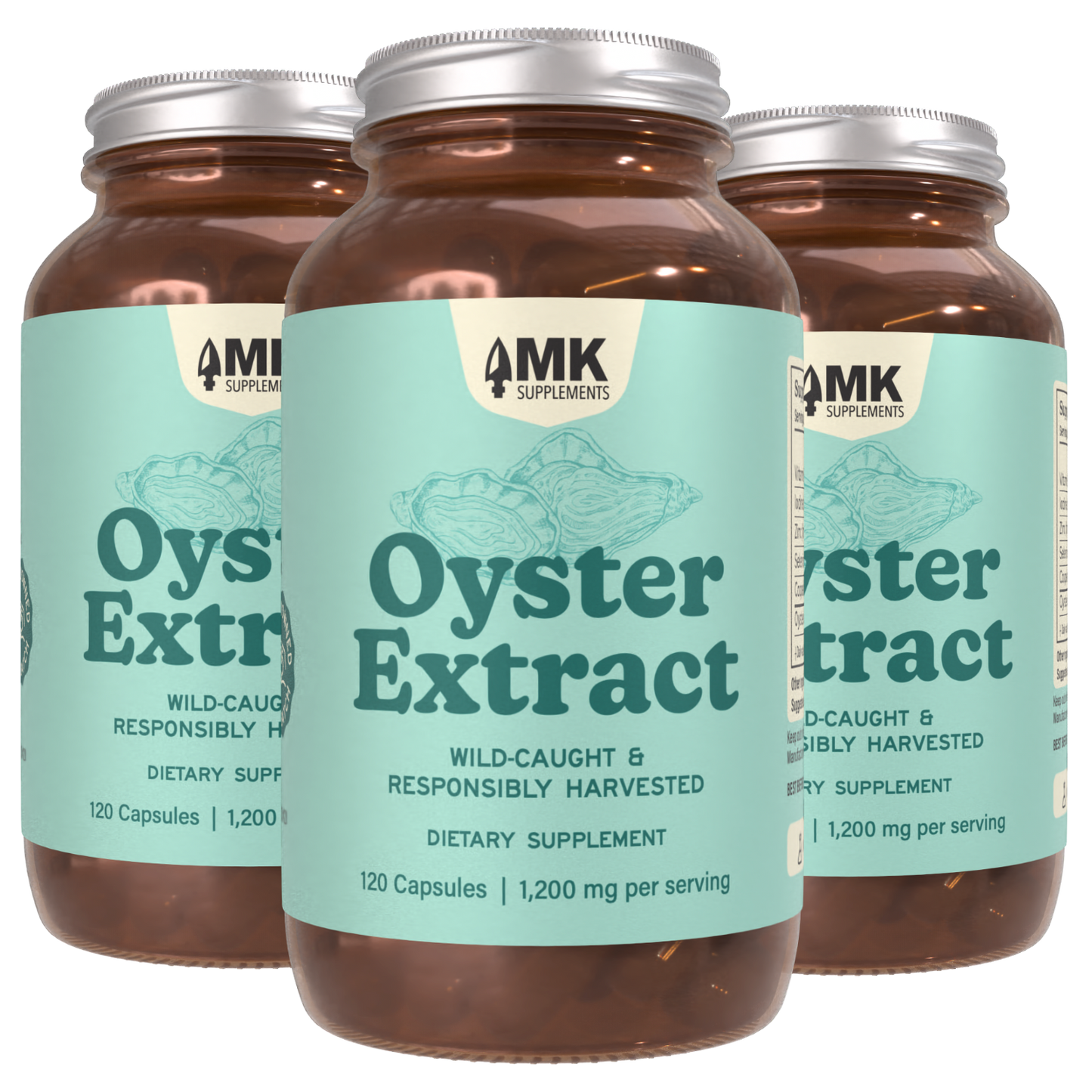
The main differences are context and tolerability.
A dedicated zinc supplement typically contains an isolated, higher-dose form of zinc (such as zinc gluconate, picolinate or citrate). While effective for correcting deficiency, these higher doses of isolated zinc can cause nausea — especially when taken on an empty stomach.
Oyster Extract provides zinc in its natural food matrix, alongside other trace minerals like copper, selenium, iodine and B12. The dose is moderate and balanced the way it appears in whole food.
Because it’s not a high-dose isolated mineral, Oyster Extract is far less likely to cause the nausea that many people experience with standalone zinc supplements.
There’s also a balance factor. Long-term high-dose isolated zinc can potentially disrupt copper status. Oyster extract naturally contains both zinc and copper in physiologic ratios, which helps support mineral balance.
In simple terms:
- Zinc supplement = high-dose isolated zinc, more likely to cause nausea.
- Oyster Extract = whole-food mineral complex, typically easier to tolerate.
If someone has a clinically diagnosed zinc deficiency, a short-term high-dose zinc supplement under medical supervision may be appropriate.
For broader mineral support — without the common side effects — Oyster Extract is often the more sustainable option.